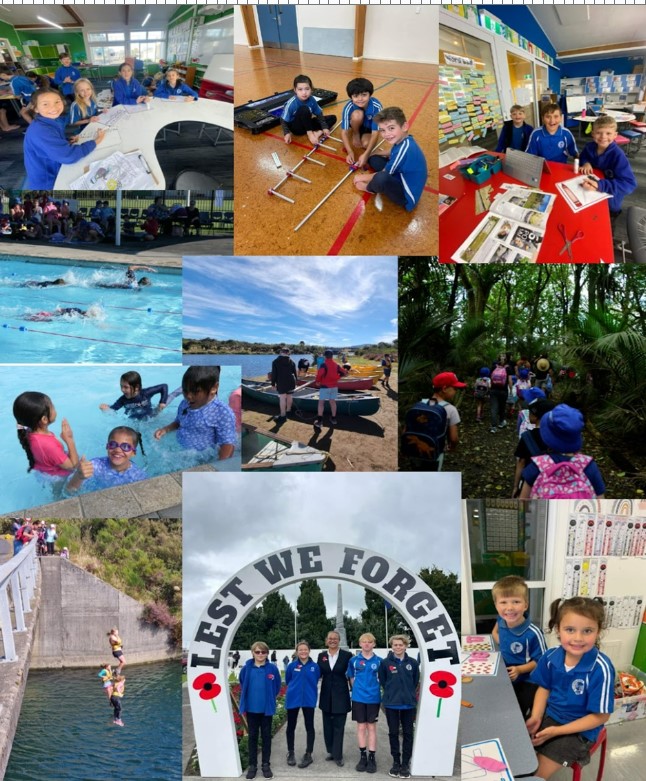
Glenbrook School has a long and proud history of serving families in the Franklin District, a history where the former school motto of “faith and work” resonated in our families and community, forming the backbone of our school heritage.
Glenbrook School is bound strongly to our rural community and we are very passionate about our school.
Our purpose: We are realising potential as learners. We accelerate ako agency.
Our students are friendly, aspirational and engaged. They love coming to school and they love learning.
- At Glenbrook School we develop the whole child.
- We aim for excellence in English, Mathematics and Science.
- We provide a range of opportunities and experiences for all our students across all curriculum areas- including in sport, outdoor education, culture, te reo, STEAM, community events and the Arts.
The curriculum is balanced through our integrated learning experiences and adventures. Senior students are able to discover pathways within our leadership programmes such as Roles and Responsibilities whilst our younger students explore the importance of play and discovery within learning.
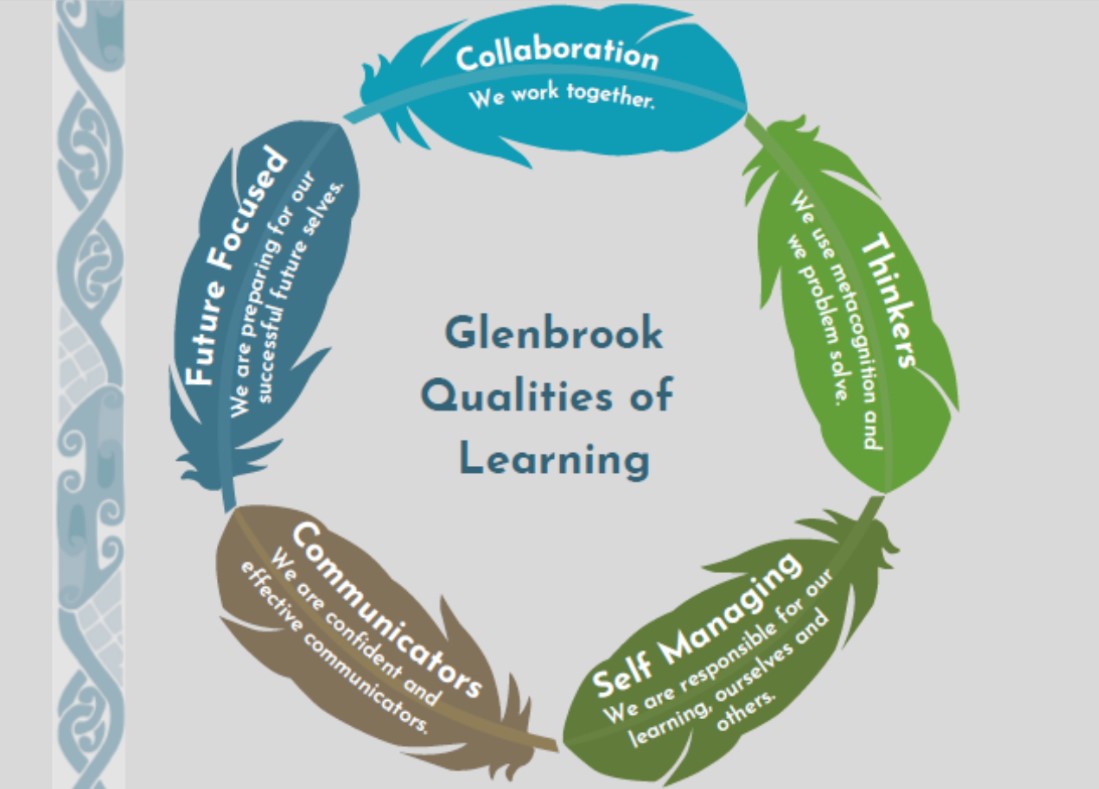
High expectations are held for every child and we love to celebrate success. We use Qualities of Learning to describe our thinking and learning. We love our FAILs (First Attempts in Learning) and more importantly learning what to do next.
We are respectful and show this through our ROLES, respect for others, learning, environment and self. It is our mana and manaakitanga which strengthen our korowai of learning in ako. Glenbrook School is an inclusive school where the well being of all is key, and contributes towards our aspirations.
Our Vision:
At Glenbrook School we want everyone to be able to realise their own potential.
This means we provide the environment and opportunities where all our students can achieve to the best of their potential. We believe that through ako, learning in action, students have the tools to articulate their needs, wants, goals, successes and failures. When learners can identify how, what and why they learn, then they are able to realise their potential in every environment and at any moment in time. They can transfer their learning skills.
This vision is inclusive of all, Maori being able to achieve as Maori, students who need additional learning support and the gifted and talented.
Our vision of Realising Potential was first developed in 2012. Regular consultation with our community identified that Realising Potential still encapsulates our vision for Glenbrook School.
Our Values:
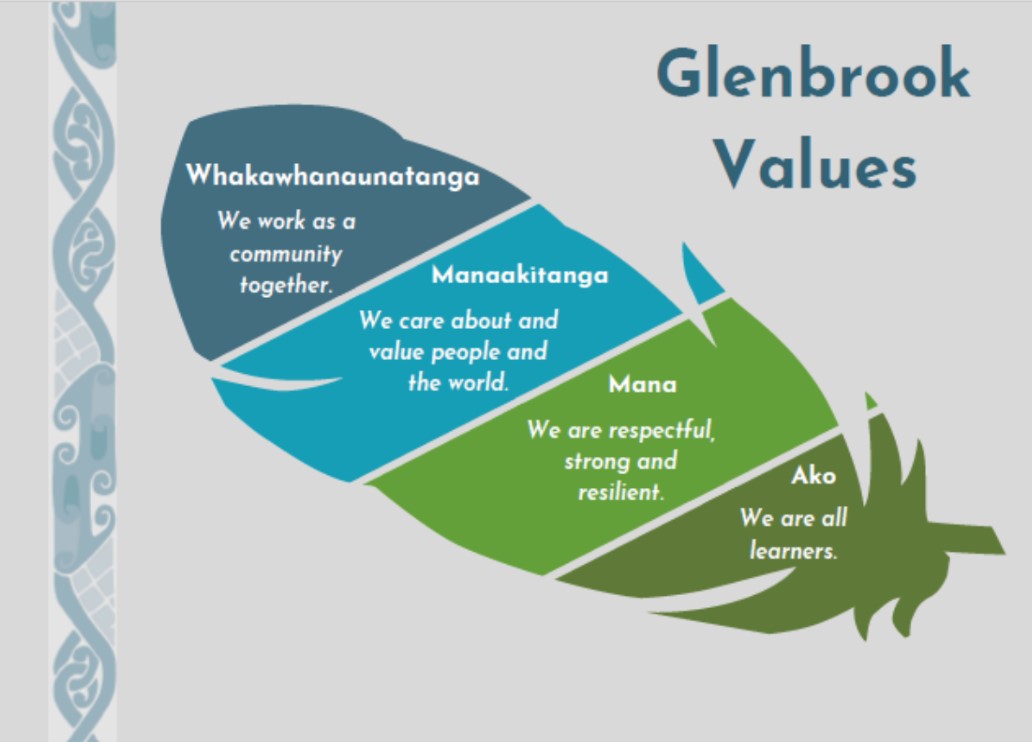
Glenbrook School has four values of manaakitanga, whakawhanaungatanga, mana and ako. Our values underpin our teaching, learning and wellbeing. Our values are……
Whakawhanaungatanga: We work as a community together.
Manaakitanga: We care about and value people and the world.
Mana: We are respectful, strong and resilient.
Ako: We are all learners.
Qualities of Learning:
Everyone in our community has a voice. We are all partners in learning at Glenbrook School, where connections and relationships are important. At the centre of our partnership is ako, learning.
Learning is central to our school purpose. We are focused on accelerating ako, learning as an action, where our Qualities of Learning give us the key competencies for a connected, life-long successful future whilst retaining our rural heritage.
At Glenbrook School our learners work towards possessing the following qualities.
Korowai of Learning:
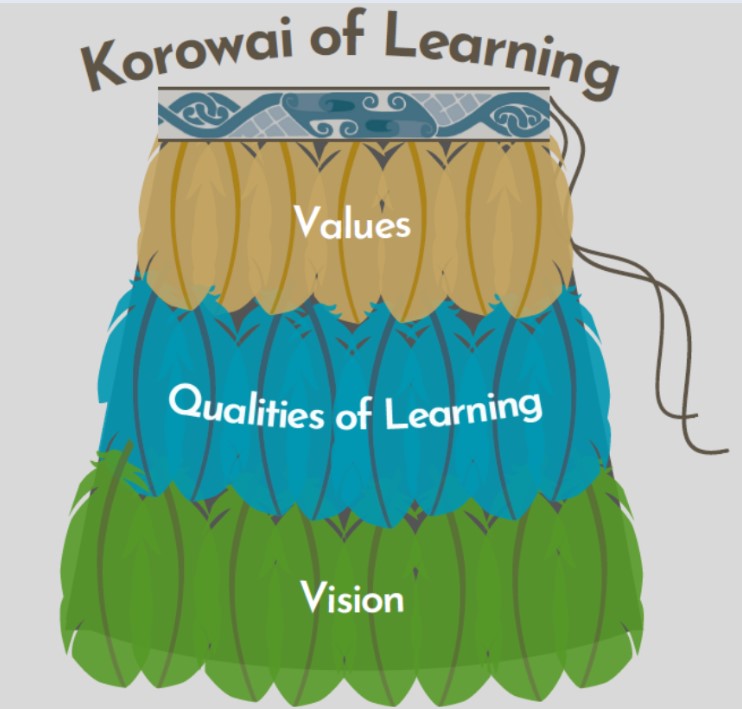
The Glenbrook School Korowai of Learning brings together our Vision, Values and Qualities of Learning where our vision for the future and our history are threaded together.
By representing who we are as a school in this korowai, we are ensuring that our Charter and Strategic Plan are living and breathing documents which reflect who we are as a community, and forms a strong base and direction for our school curriculum.
Te Ao Maori:
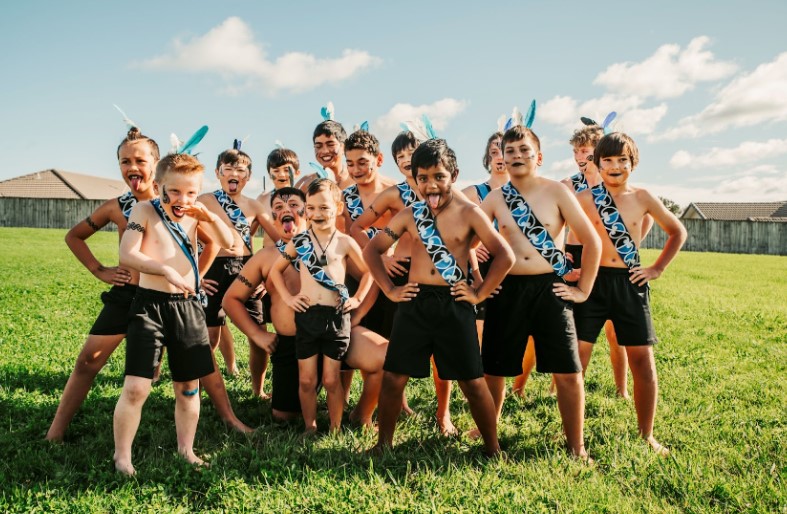
At Glenbrook School, we continue to make connections from our past, while preparing in our present and for our future selves. “Mātai ki te rangi, homai te kauhau wānanga ki uta, ka whiti he ora”. Look beyond the horizon, and draw near the bodies of knowledge that will take us into the future. (Te Mātaiaho 2023).
At Glenbrook School we acknowledge and give effect to Te Tiriti o Waitangi. We actively seek to engage and promote the principles- partnership, protection and participation of Te Tiriti O Waitangi. We review our cultural responsiveness annually with all. We recognise Ngati Te Ata, who are mana whenua and we ensure that Maori are succeeding as Maori. Te Tiriti and its principles (as articulated by the Courts and the Waitangi Tribunal) set out obligations for the Crown and Māori, that guide how tangata Tiriti¹ and tangata whenua can live together with mutual respect. The key principles include rangatiratanga, partnership, participation, active protection, equity, and opportunity. They provide for the active protection of taonga, including te reo Māori, tikanga Māori, and mātauranga Māori, and enable fair and equitable educational processes and outcomes for Māori and for all ākonga.
Each year we ask our Maori whanau what we do well and what we can do better. As a result at Glenbrook School:
- Every child and teacher learns and shares their pepeha.
- Each day students and staff begin the day with a non-denominational karakia.
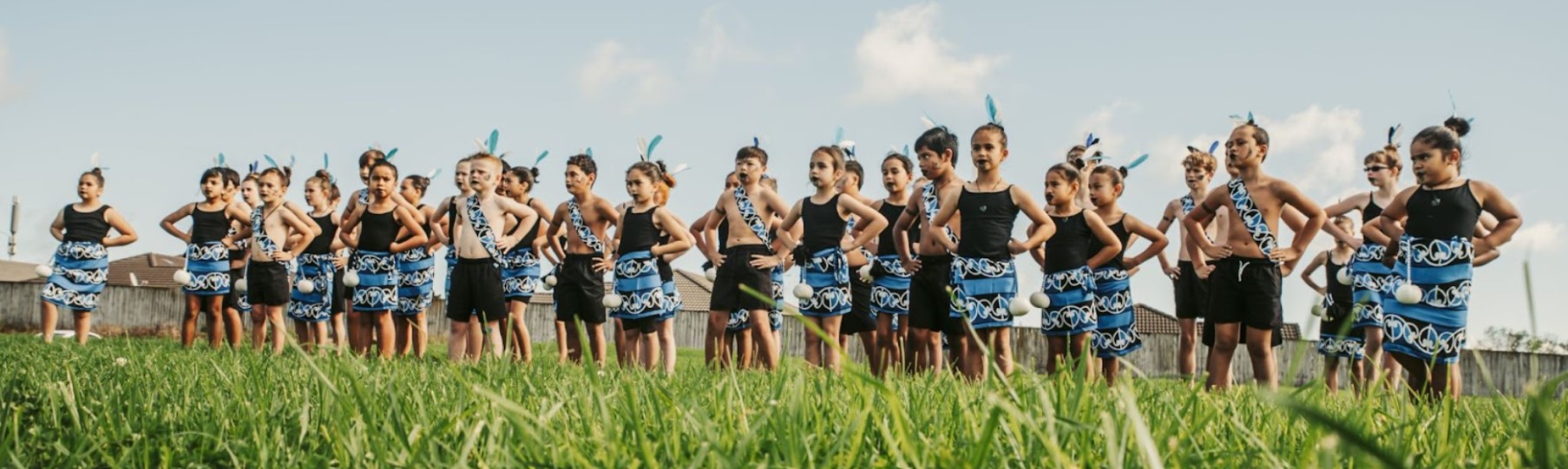
- We provide Kapa Haka and waiata weekly for our whole school.
- Te Reo is taught weekly on Wednesdays 1.40-2.40pm.
- Tikanga me ona reo are planned for and taught.
- Active development and strengthening of Tuakana Leaders.
- Staff are developed professionally in the culturally responsive kaupapa of Ka Hikitia, Ta Tataiako and Te Tiriti of Waitangi and Te Mataiho to continuously build capability and understanding.
- Teachers complete regular te reo PLD and some teachers engage in Te Ahu o te reo Maori.
- School Evaluation Indicators concepts of Whakawhanaungatanga, manaakitanga, ako and mahi tahi are identified in all action plans that evaluate the learning and wellbeing of Glenbrook School.
- Board of Governors review the cultural responsiveness of Glenbrook School annually through Hautu.
- Consultation and whakawhanaungatanga occur through hui, kanohi ki te kanohi and korero.
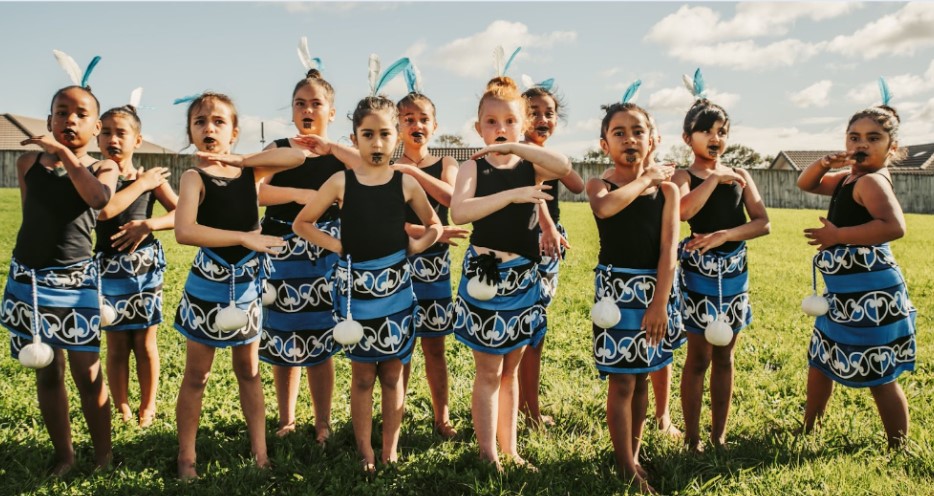
Realising Potential:
Our Glenbrook Values- whakawhanaungatanga, manaakitanga, mana and ako – are deliberately planned for and delivered in our lessons.
Each year we participate in Cultural Exchanges with other schools.
Each year we participate and are represented at the Franklin Cultural Festival, Waiuku Matariki Concert, Franklin Te Reo competitions. .
The learning data of Maori students is shared with Whanau and steps are taken to ensure Maori student outcomes are accelerated as priority learners and tangata whenua.

The relationship between Glenbrook School and Maori can be further explained through the carving that sits above the entrance to the Glenbrook School hall.

It was carved by local kaumatua George Flavell as the gateway to our hall where we all come to meet as a school, as a community and as a whanau.
The story within this carving describes our connections to Te Ao Maori and the development of the whole learner.
The kete of knowledge relates to fostering the attitudes, skills and knowledge of each child upon which life-long learning is built. This reflects our value of Ako – we are all learners
The koru locked together reflect our partnerships, partnerships with our students, staff, whanau, community and others. This is our value of whakawhanaungatanga. – at Glenbrook School we work as a community together.
Finally, nga-hau-e-wha or the four winds, which have two meanings:
Firstly it depicts the four corners of the earth and the different nationalities attending Glenbrook School. It reflects our values of manaakitanga and mana.
Secondly the ends of the “cross” reflects the need for the development of all areas of wellbeing. For Maori they are;
Taha Whanau: Family Health Taha Tinana: Physical Health
Taha Wairua: Spiritual Health Taha Hinengaro: Mental Health
 Glenbrook School